Description
Turn anatomical knowledge into practical bedside understanding.
Why can a humeral fracture cause wrist drop? How does appendicitis produce migrating abdominal pain? Which anatomical relationships explain nerve injuries, hernias and common clinical findings?
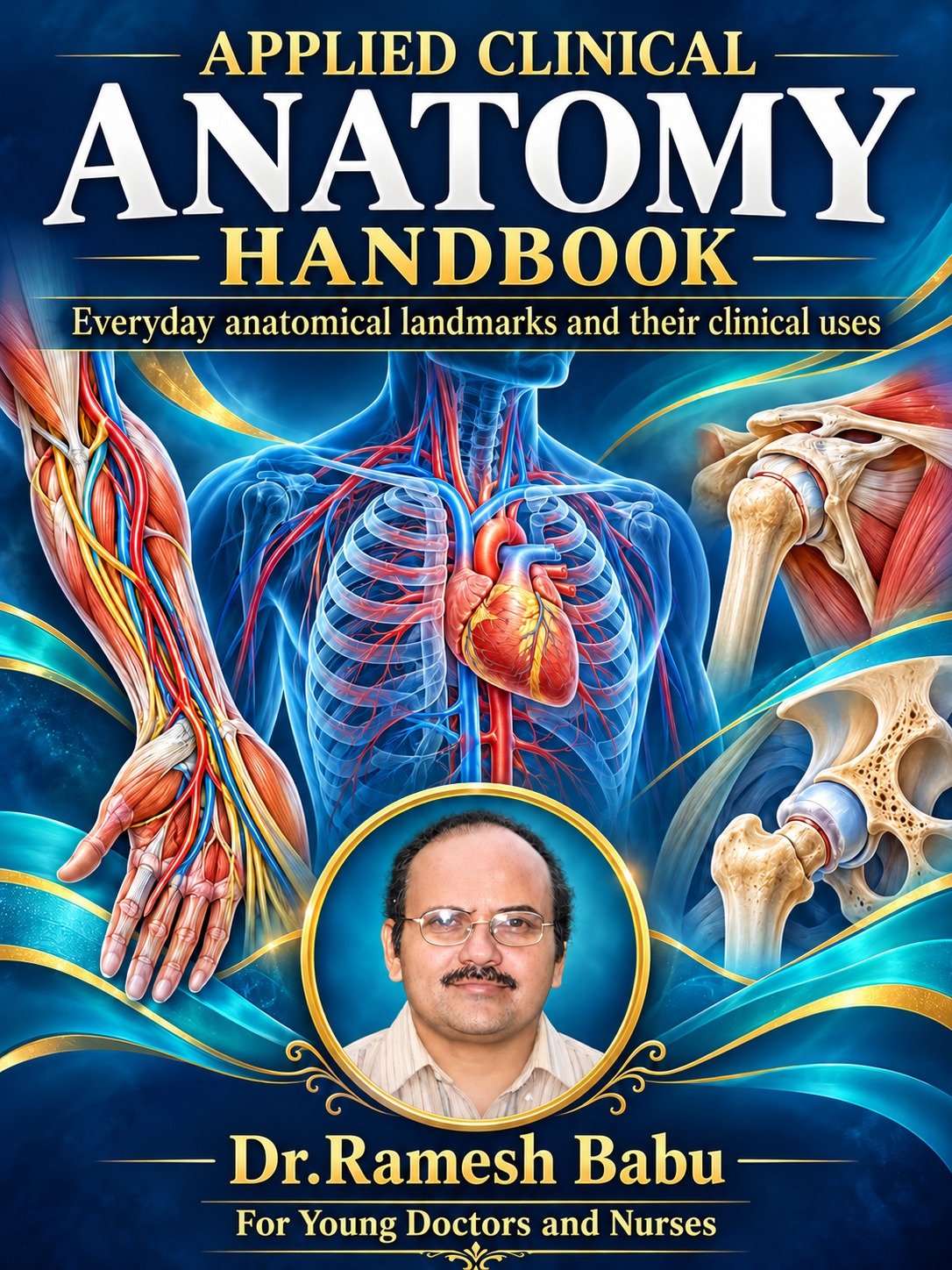
Applied Clinical Anatomy Handbook by Dr. Ramesh Babu connects essential anatomy with the situations encountered in everyday clinical practice. Written in a clear, concise format, it links anatomical landmarks to physical examination, investigations and the clinical relevance of common procedures.
From locating a pulse to interpreting a pattern of weakness, this handbook helps readers understand why anatomical knowledge matters at the bedside.
Inside this handbook, you will find:
- Regional anatomy at a glance: Practical landmarks of the head, neck, thorax, abdomen, pelvis, spine and limbs.
- Vessels and nerves: Pulse points, vascular relationships, sensory territories and common nerve injury patterns.
- Clinical correlations: Anatomical explanations for referred pain, hernias, fractures, joint injuries and organ-related symptoms.
- Neurological localisation: Connections between muscle power, reflexes, dermatomes and spinal pathways.
- Recognition of urgent findings: The anatomical basis of conditions such as compartment syndrome, acute limb ischaemia and cauda equina compression.
- Bedside cases and visual guides: Short clinical scenarios and focused illustrations that reinforce learning and revision.
The straightforward “landmark followed by clinical use” approach makes the book easy to consult during study, ward preparation and clinical revision. Expanded explanations help readers move beyond memorising structures to understanding their practical significance.
Designed for medical students, interns, young doctors, nurses and allied health professionals, this handbook offers an accessible bridge between classroom anatomy and patient examination.
It explains the anatomical relevance of procedures while keeping its focus on clinical understanding, rather than serving as a procedural manual.
A concise companion for learning anatomy with a clinical purpose—one landmark, one connection and one bedside application at a time.
Reviews
There are no reviews yet.